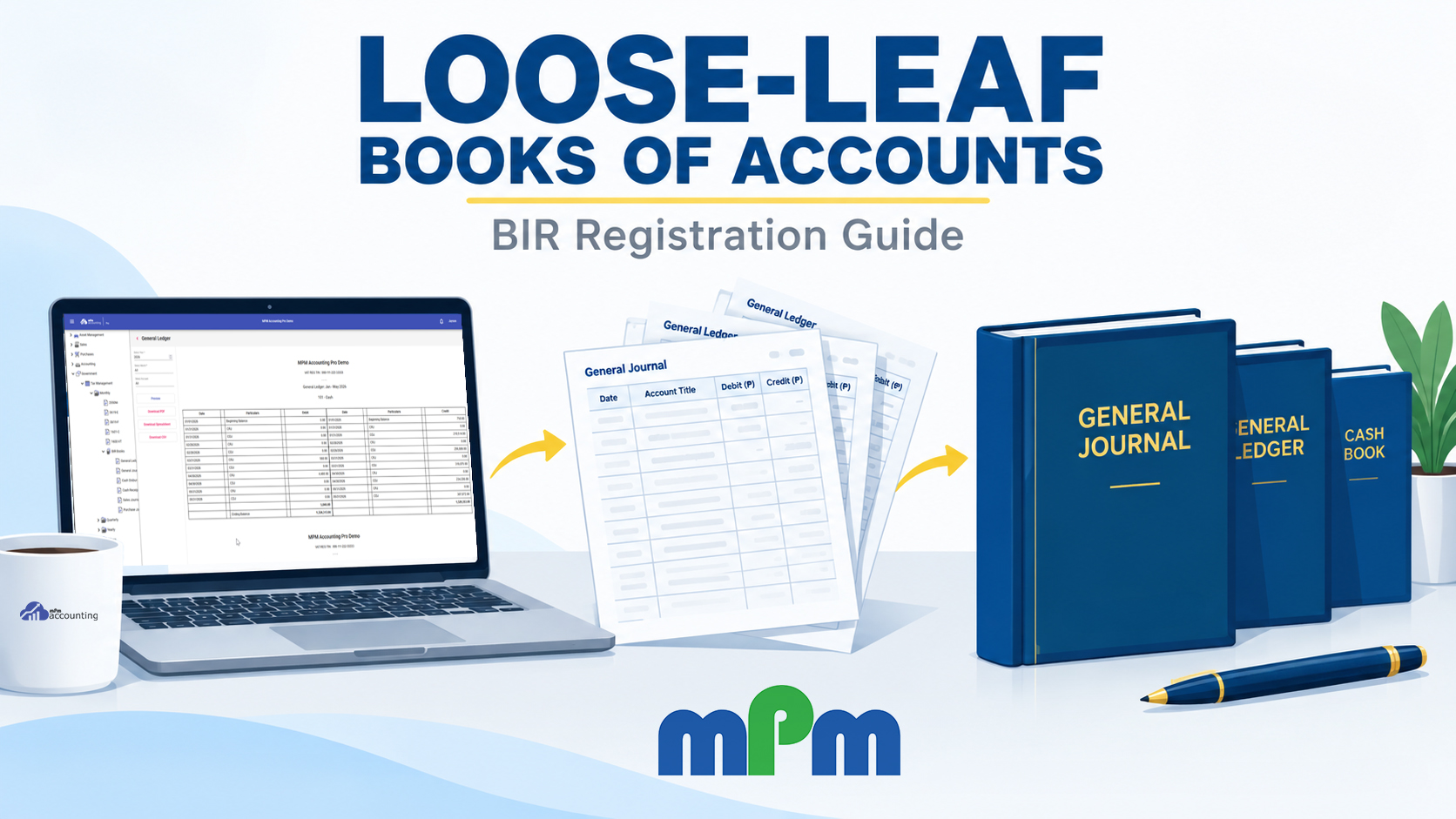
Loose-leaf books of accounts is one of the three ways businesses, self-employed, freelancers, and practicing professionals in the Philippines can register in the Bureau of Internal Revenue (BIR) to comply with the requirement of keeping books and accounting records.
Looseleaf books of accounts provides a practical middle ground between manual books of accounts and computerized books of accounts.
Instead of handwriting transactions in physical manual journals and ledgers, your accounting records are prepared electronically and printed using an approved format. At the end of the taxable year, the printed pages are permanently bound and registered with the BIR.
Before using loose-leaf books, however, you need to secure a Permit to Use (PTU) Loose-Leaf Books of Accounts from the BIR.
This guide will answer what is loose-leaf books of accounts, why businesses and self-employed chooses it, how to apply for a PTU Looseleaf through BIR ORUS, and what you need to do every year after approval.
What are Loose-Leaf Books of Accounts?
Loose-leaf books are accounting books that are prepared using a computer but ultimately maintained as printed and permanently bound records.
Depending on your accounting requirements, your books may include:
- General Journal
- General Ledger
- Sales Journal
- Purchase Journal
- Cash Receipts Journal
- Cash Disbursements Journal
The exact books you need will depend on the nature of your business and accounting requirements.
Below is a sample loose-leaf books of accounts:
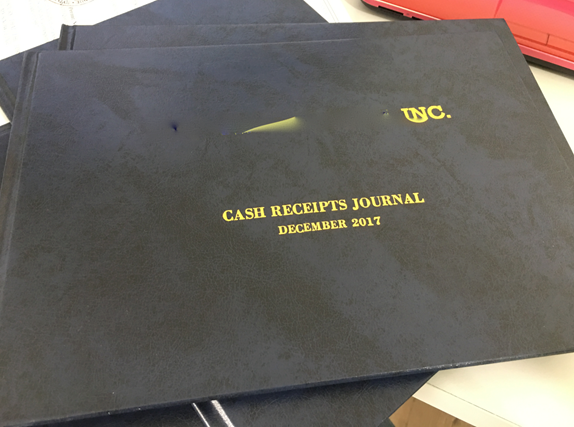
This makes loose-leaf bookkeeping different from traditional manual books, where transactions are handwritten directly into registered physical manual books.
It is also different from computerized books of accounts, where accounting records are maintained electronically under the applicable BIR requirements for computerized accounting systems (CAS) or computerized books of accounts (CBA).
Why consider Loose-Leaf Books of Accounts?
In the early years of MPM, I personally found maintaining handwritten accounting books unnecessarily time-consuming.
So in the early 2010s, I tried to move to computerized books.
At the time, registering computerized books was not as straightforward as it is today. The process involved submitting documents, coordinating with the BIR, and demonstrating the system to the Revenue Officer. Applications could take considerable time to process.
I did not want to go back to handwriting our books, so I started looking for another option.
That was when I discovered loose-leaf books of accounts.
Even loose-leaf registration was not widely understood at the time. When I first applied, there was some initial resistance and uncertainty about the process. Eventually, our application was approved.
Since then, we have also recommended and assisted clients in using loose-leaf books when appropriate.
The process has changed considerably over the years, particularly with the introduction of the BIR’s Online Registration and Update System (ORUS).
Before BIR ORUS was launched, the application form and requirements for PTU Looseleaf were submitted in the BIR Regional District Office (RDO). But in recent years, the BIR RDO no longer accepts application for PTU Looseleaf. Application for Permit to Use Looseleaf must now be done via BIR ORUS.
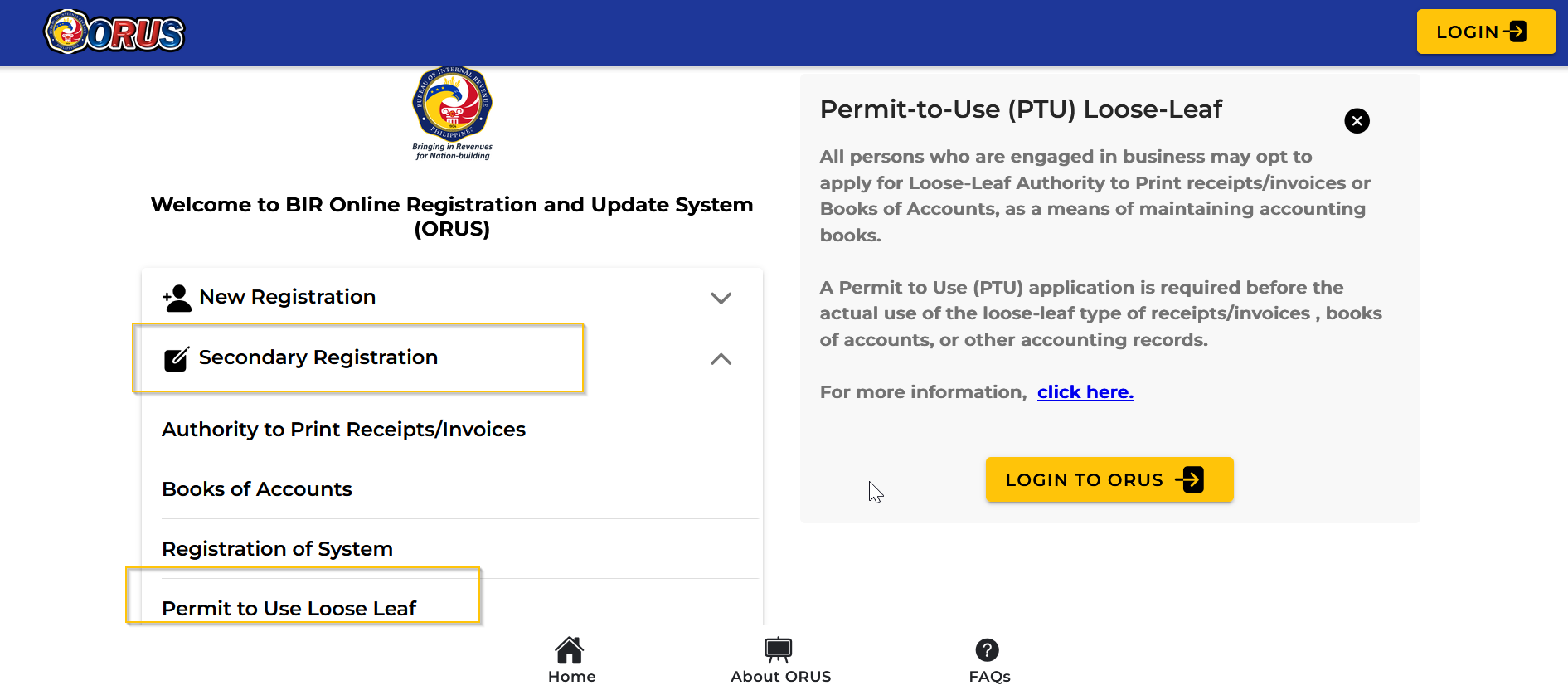
Manual vs. Loose-Leaf vs. Computerized Books
It helps to understand where loose-leaf books fit among the available methods.
| Method | How Records Are Maintained | Typical Process |
|---|---|---|
| Manual Books | Transactions are handwritten in registered books | Register the books with the BIR and write entries manually |
| Loose-Leaf Books | Records are prepared electronically, printed, and permanently bound. A mandatory compliance to annual submission 15 days after the close of the taxable year. Example: Taxable Year Ending December 31 are due every January 15 | Secure a PTU, use the approved formats, then bind and register the books annually |
| Computerized Books | Records are maintained electronically using a computerized accounting system. A mandatory compliance to annual submission 30 days after the close of the taxable year. Example: Taxable Year Ending December 31 are due every January 30 | Follow the applicable BIR requirements for computerized books/accounting systems |
For businesses that already use accounting software but still need or prefer printed books, loose-leaf books can therefore be a practical option.
How to register Loose-Leaf Books of Accounts?
The process for obtaining a Permit to Use Loose-Leaf Books of Accounts has evolved with the BIR’s adoption of online registration services.
The BIR’s current documentary requirements provide for online application through ORUS. The BIR has also moved registration of books of accounts online through ORUS, with a QR Code generated instead of the previous manual stamping of books.
Before starting your application, make sure your BIR registration information and email address are updated so you can access the online services you need.
Step 1: Make sure you can access BIR ORUS
You will need access to the BIR’s Online Registration and Update System.
If you have an existing BIR Registration but you don’t have BIR ORUS login credentials yet, fill out the BIR Form S1905 – Registration Update Sheet and submit it to your BIR RDO. The BIR will then email your BIR ORUS login details.
Once your ORUS access is ready, you can proceed with the Application for Permit to Use (PTU) Loose-leaf books of accounts.
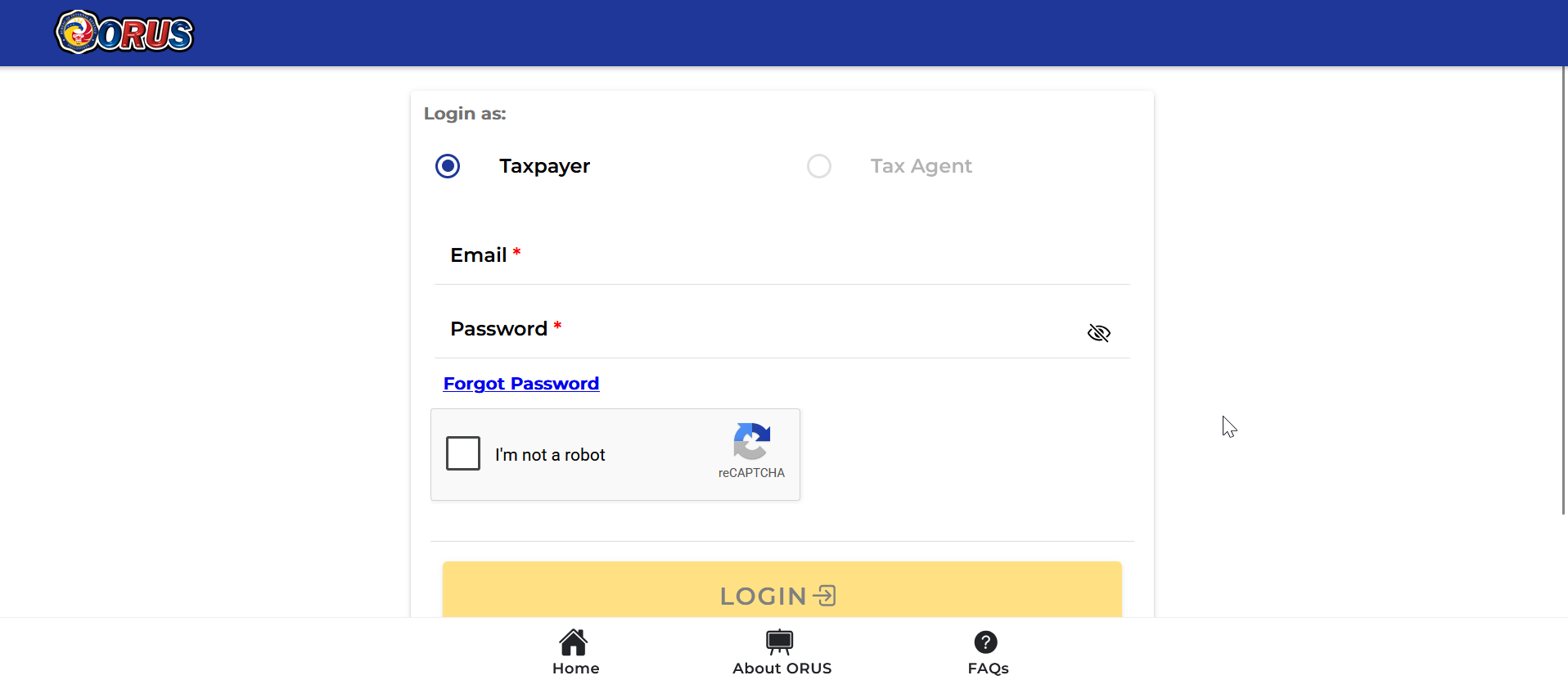
Step 2: Prepare the required documents
Before starting the application, prepare the documents required for your application for Permit to Use (PTU) Loose-Leaf Books of Accounts.
Based on the BIR’s current documentary requirements, these generally includes the following:
1. Application for Permit to Use (PTU) Loose-leaf Books of Accounts (BIR Form No. 1900)
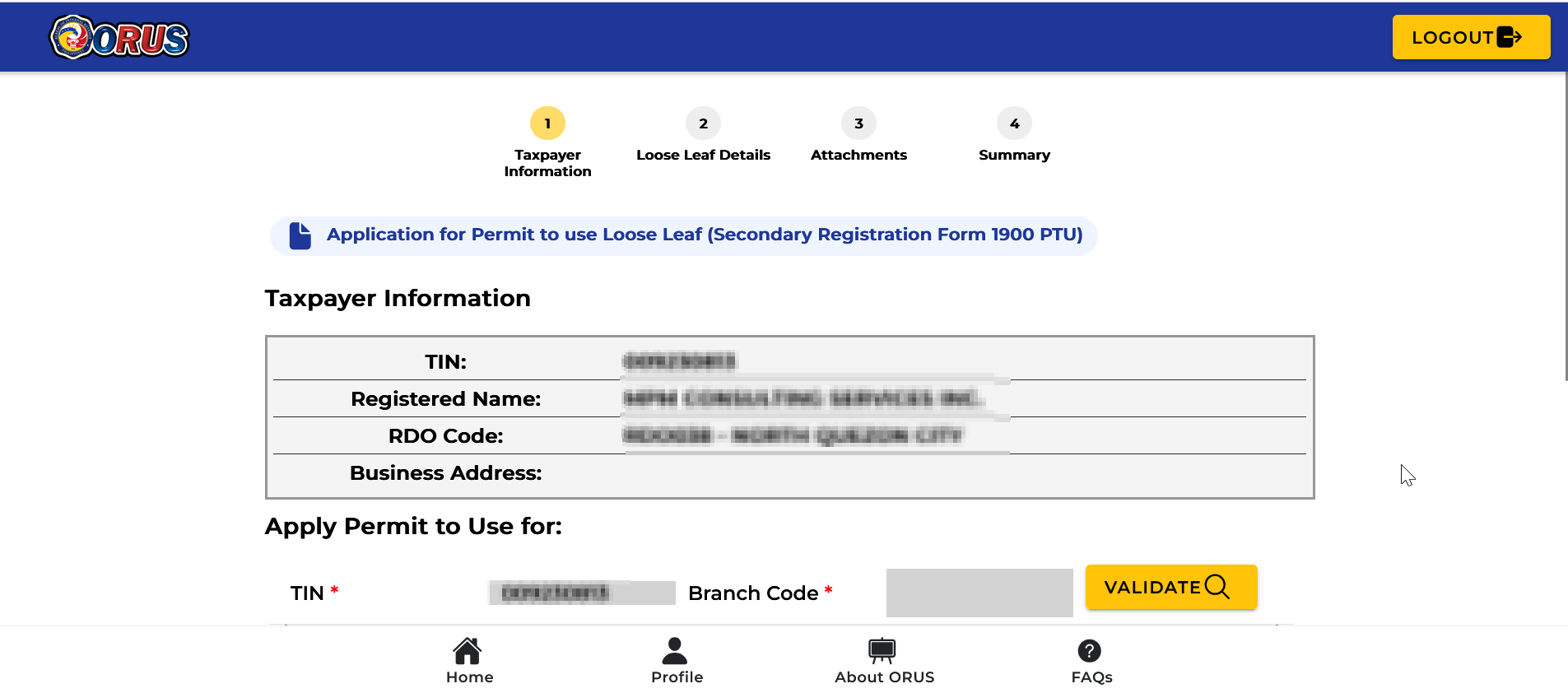
In the BIR ORUS, fill-out your information in the Application for Permit to Use (PTU) Loose-leaf Books of Accounts (BIR Form No. 1900) page.
2. Sample Format and Printout of the Books of Accounts
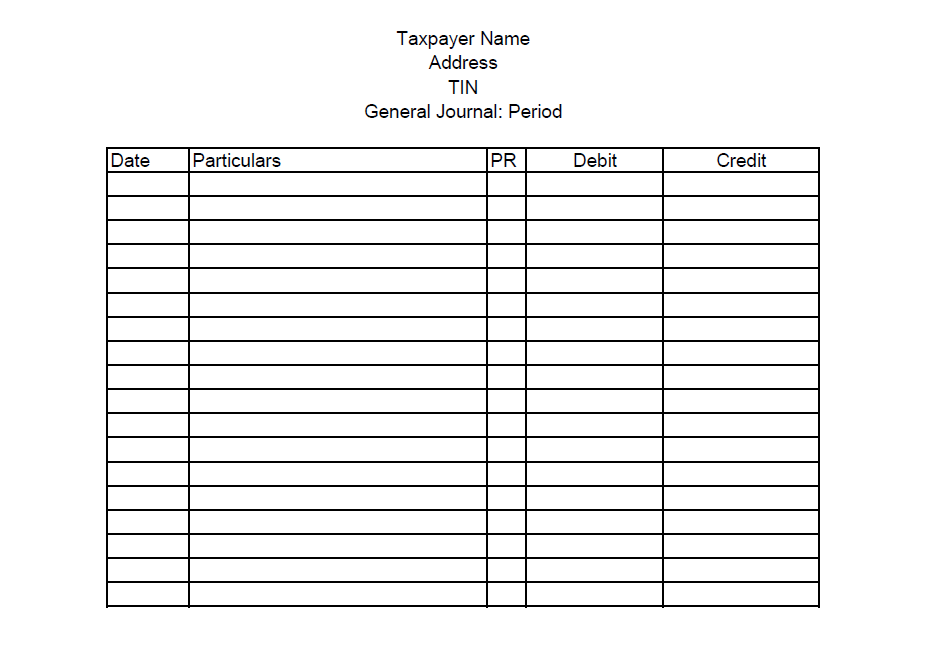
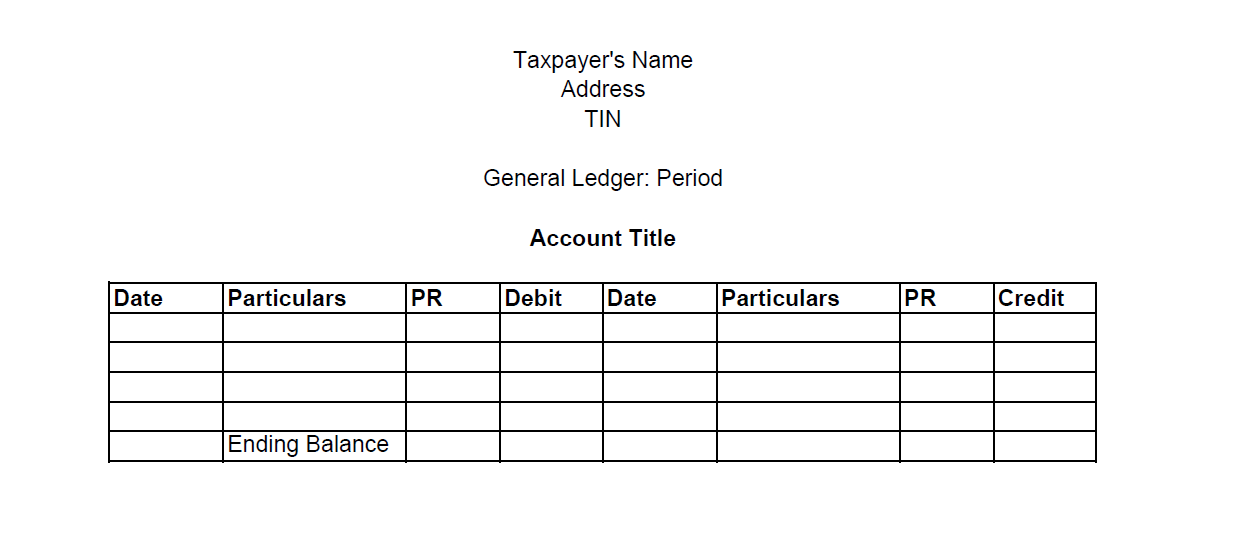
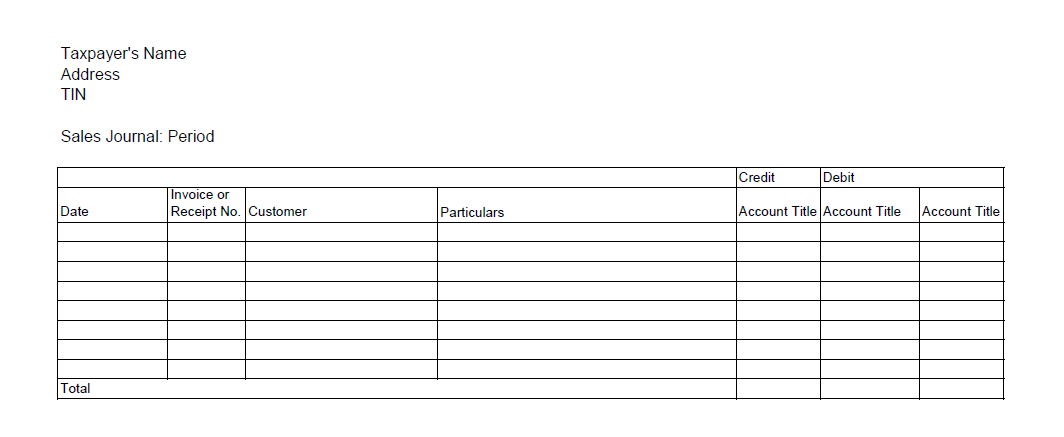
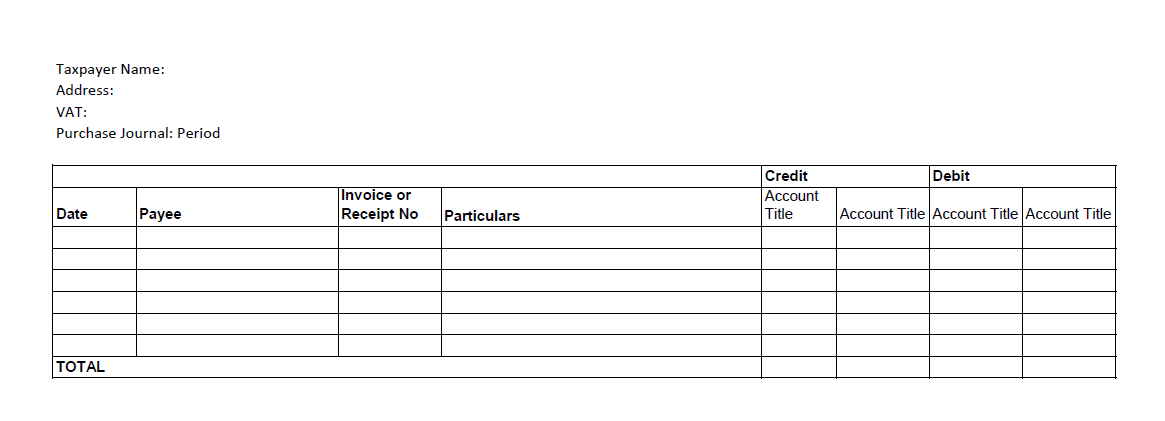
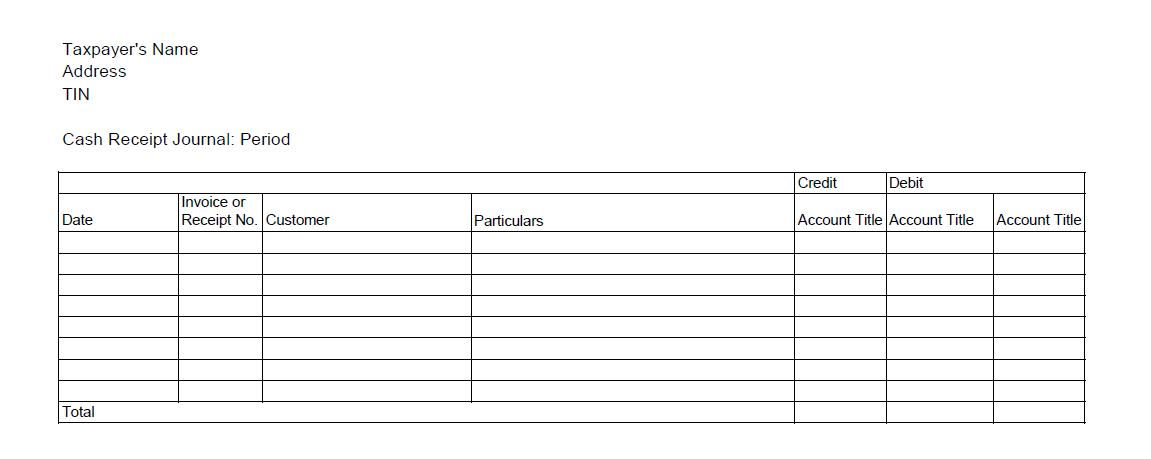
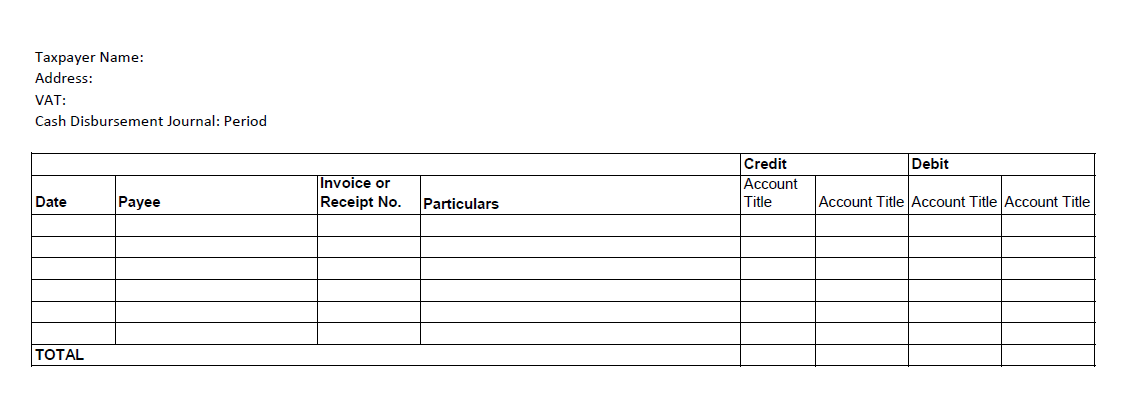
In your application for PTU Loose-leaf, you need to provide sample format of your journals and ledger.
This is an important part of the application because the BIR needs to see the format of the accounting records you intend to use.
Depending on the books you maintain, these may include samples of your:
- General Journal
- General Ledger
- Sales Journal
- Purchase Journal
- Cash Receipts Journal
- Cash Disbursements Journal
Below are sample format:
3. Sworn Statement
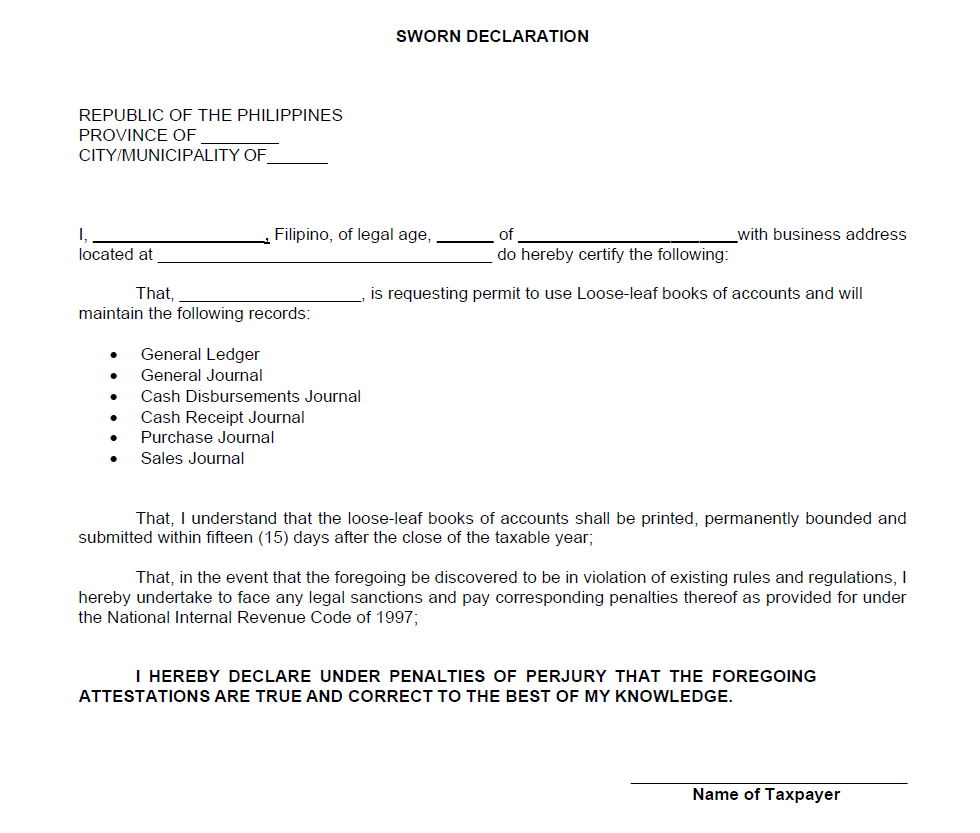
A notarized and signed sworn statement must also be attached in your application for Permit to Use (PTU) Loose-leaf books of accounts.
The sworn statement must specify the following:
a) Identifying the books to be used such as the following sample: General Ledger, General Journal, Sales Journal, Purchase Journal, Cash Receipt Journal and Cash Disbursement Journal.
b) Commitment to permanently bind the loose-leaf forms within 15 days after the close of the taxable year
Below is a sample Sworn Statement:
Additional Documents When Applicable
If the application is being handled by an authorized representative, additional documents may be required, such as:
- Special Power of Attorney (SPA) (for individual taxpayer) or Secretary Certificate (for non-individual taxpayer)
- Government-issued identification of the taxpayer or authorized representative, as required
Because documentary requirements and online procedures can change, it is a good practice to check the latest BIR requirements before submitting your application.
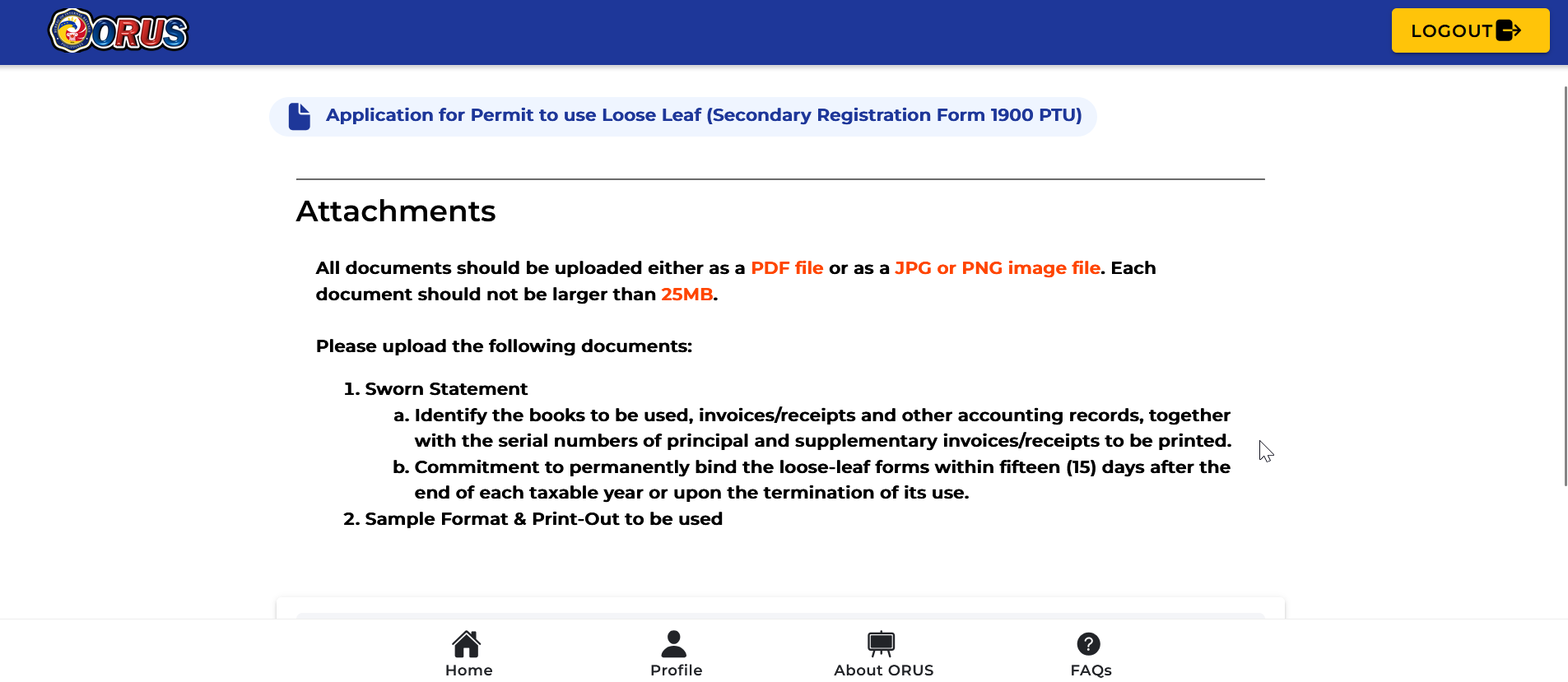
Step 3: Apply for the Permit to Use Loose-Leaf Books
Once your requirements are ready, proceed with the online application through BIR ORUS.
The BIR’s current Checklist of Documentary Requirements provides for an online application through the Online Registration and Update System (ORUS).
Complete the application and provide the required information and documents as instructed by the system.
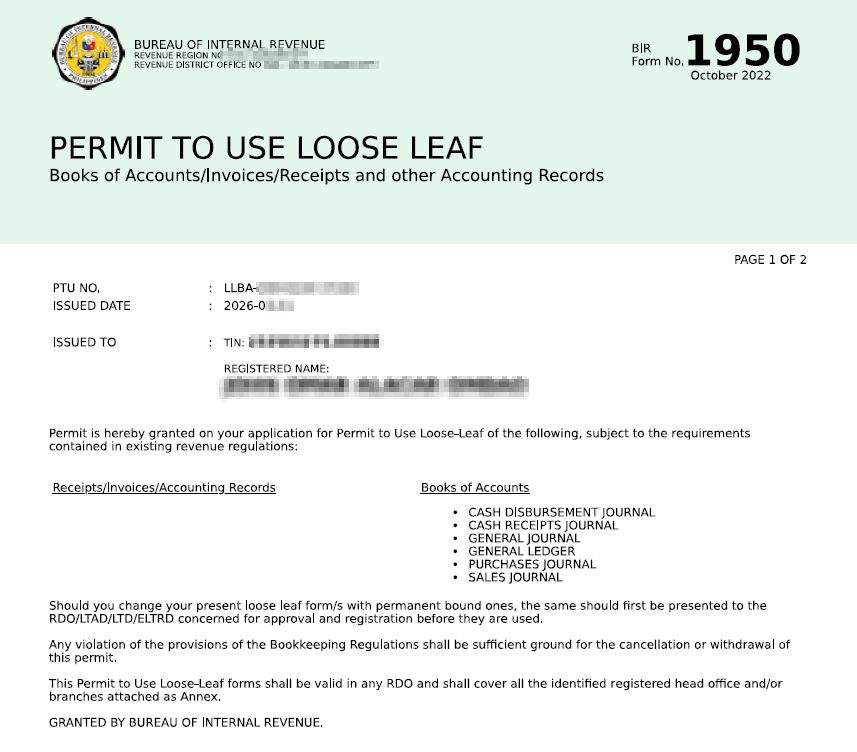
Once approved, you can download and print your Permit to Use Loose-Leaf Books of Accounts.
Keep a copy of the approved permit together with your accounting and BIR registration records.
Below is a sample PTU Looseleaf:
What happens after your Permit to Use (PTU) Loose-leaf Books of Accounts is approved?
Receiving the Permit to Use (PTU) Loose-leaf books of accounts does not mean that you are finished with the loose-leaf compliance process.
You can now maintain your accounting records using the approved loose-leaf formats, but the resulting books must still be permanently bound and registered annually.
This is an important distinction:
The Permit to Use (PTU) Loose-leaf books of accounts authorizes you to use the loose-leaf system. The books generated under that system must still comply with the annual registration requirement.
Under BIR Revenue Memorandum Circular No. 3-2023, permanently bound loose-leaf books of accounts must be registered within 15 days after the end of each taxable year, or within 15 days from the closure of business operations, whichever comes earlier, unless an extension is properly granted.
For a business using a calendar year ending December 31, this generally means completing the requirement by January 15 of the following year.
This article focuses primarily on getting your Permit to Use (PTU) Loose-Leaf Books of Accounts and setting up your books. If you already have a Permit to Use (PTU) Loose-leaf books of accounts and are preparing your books for year-end, see our guide to the annual registration and submission of loose-leaf books of accounts for the year-end process and requirements.
Example: Loose-Leaf Books for a Calendar-Year Accounting Period
Suppose your business uses a calendar-year accounting period.
Throughout the year, you record your transactions using your accounting software and generate your journals and ledgers using the formats covered by your loose-leaf setup.
After December 31:
- Generate the complete books covering the taxable year.
- Print the applicable journals and ledgers using the approved formats.
- Permanently bind the books.
- Complete the required annual registration through the applicable BIR process.
- Complete the requirement within 15 days after the end of the taxable year — generally by January 15 for a calendar-year taxpayer.
This annual requirement is one of the most important things to remember when choosing loose-leaf books.
Your Books May Need to Be Finalized Earlier Than Your Annual ITR
One practical consideration when using loose-leaf books of accounts is that you should not use the annual Income Tax Return (ITR) filing deadline as your target date for completing the previous year’s accounting records.
For calendar-year taxpayers, the annual ITR is generally due on April 15 of the following year. However, permanently bound loose-leaf books have an earlier deadline: they must generally be registered within 15 days after the end of the taxable year.
For a calendar-year taxpayer, this means the loose-leaf books generally need to be ready by January 15.
In practice, this means your accounting records may need to be substantially finalized much earlier than the annual ITR deadline. You need enough time after year-end to complete the necessary entries, review the books, generate the final journals and ledgers, print them, and permanently bind them before completing the annual registration requirement.
For example, you should not plan to finalize your 2026 accounting records only in March or early April 2027 simply because your 2026 annual ITR is due in April. If you are using loose-leaf books, your year-end closing process must take the January 15, 2027 loose-leaf deadline into account.
This makes year-end bookkeeping discipline particularly important for businesses using loose-leaf books. Transactions, bank reconciliations, adjusting entries, and other year-end accounting work should be kept reasonably up to date throughout the year rather than being postponed until annual income tax preparation.
Do you need to apply for a new Permit to Use (PTU) Loose-leaf Books of Accounts every year?
The annual registration requirement should not be confused with applying for a new Permit to Use every year.
The Permit to Use (PTU) Loose-leaf books of accounts covers your authority to use your approved loose-leaf setup. The recurring annual requirement concerns the permanently bound loose-leaf books generated for the taxable year.
This distinction is useful because new loose-leaf users sometimes assume that obtaining the PTU completes all future registration requirements.
It does not. But you still need to properly generate, print, permanently bind, and register your loose-leaf books every year.
Can an accounting software be used for Loose-Leaf Books?
Yes. One of the main advantages of loose-leaf books is that the underlying accounting records can be prepared electronically.
However, simply using accounting software does not automatically make your books BIR-compliant loose-leaf books.
The formats you intend to use form part of your PTU application. Your accounting system should therefore be capable of producing the journals and ledgers in the formats covered by your approved loose-leaf setup.
Ideally, the accounting software should already be capable of generating the journals and ledgers in the format you intend to submit with your PTU application. This avoids having to reconstruct or reformat an entire year’s accounting records later.
Using MPM Accounting for Loose-Leaf Books
MPM Accounting can generate the books of accounts commonly required for loose-leaf registration, including journals and ledgers that can be printed and permanently bound at the end of the taxable year.
The loose-leaf book formats available in MPM Accounting are not simply generic accounting reports. These formats have been used in actual loose-leaf applications and have been tested through registrations with the BIR.
This is based on our own experience using MPM Accounting and assisting clients with their loose-leaf books.
We have also encountered differences in the formats accepted by different Revenue District Offices (RDOs). A particular journal or ledger format accepted by one RDO may sometimes receive additional requirements or requested changes from another RDO.
Because of this, some books in MPM Accounting are available in different versions or formats. This allows users to select a format appropriate for their requirements and, when necessary, accommodate the format requested by their RDO.
This experience is also why we recommend preparing the sample printouts early in the PTU application process. The sample books form part of the application, so any questions or requested changes to the format can be addressed before you begin using the approved loose-leaf setup for your actual accounting records.
Once your format has been approved, it is important to continue using the approved format when generating your loose-leaf books.
Is Loose-Leaf right for your business or self-employment?
Loose-leaf books can be particularly useful for businesses, self-employed, and professionals who want to avoid manually handwriting their accounting records but do not want to maintain their books under a fully computerized-books setup.
They provide a practical balance:
Transactions are recorded electronically during the year, while the official books are printed, permanently bound, and registered in accordance with BIR requirements.
There are trade-offs.
Because loose-leaf books must eventually be printed and bound, businesses with a very high volume of transactions may end up producing a considerable number of pages. In these cases, computerized books may be worth considering.
For smaller businesses, professionals, and taxpayers already maintaining their accounting records electronically, however, loose-leaf books can remain a practical alternative to traditional handwritten books.
Common mistakes to avoid
If you decide to use loose-leaf books, there are a few practical mistakes worth avoiding.
Using a format before obtaining approval. The sample formats are part of the PTU application. Do not assume that any journal or ledger generated by accounting software will automatically be acceptable for your loose-leaf books.
Waiting until annual ITR preparation to finalize your books. For calendar-year taxpayers, the annual ITR may generally be due on April 15, but the deadline for registering permanently bound loose-leaf books generally comes much earlier, on January 15. Your year-end bookkeeping schedule should account for this earlier deadline.
Waiting until January to check your books. Generate and review your journals and ledgers periodically during the year. Discovering a formatting or accounting problem only when you are preparing hundreds of pages for binding can create unnecessary work.
Assuming the PTU replaces annual registration. Obtaining your PTU and registering your permanently bound books are separate compliance requirements.
Forgetting the 15-day deadline. Calendar-year taxpayers should prepare ahead of December 31 so they can complete the annual requirement within the prescribed period.
Assuming every RDO will handle format questions exactly the same way. Based on our experience assisting taxpayers, RDOs may raise different questions or request adjustments to a proposed format. Having your sample books ready during the application stage makes these issues easier to address.
Remember the Annual Deadline
The most important thing to remember after securing your PTU is that loose-leaf compliance does not end with the permit.
Maintain your records throughout the year using your approved format. After the close of the taxable year, generate the complete books, print and permanently bind them, and complete the required BIR registration within the prescribed period.
For calendar-year taxpayers, this generally means within 15 days after December 31, or by January 15 of the following year — considerably earlier than the April 15 annual income tax return deadline.
If you are already an MPM Accounting subscriber, you can generate the applicable journals and ledgers directly from the system using formats that we have used in actual loose-leaf registrations.
We can also assist you with the registration of your loose-leaf books with the BIR. With the appropriate authorization, our team can prepare and process the application on your behalf, including selecting the appropriate MPM Accounting book formats, preparing the required reports and supporting documents, and submitting the application through the applicable BIR process.
Because we have handled actual loose-leaf registrations for MPM Accounting users, we are also familiar with the differences in book formats that may be requested by different RDOs. Where MPM Accounting provides alternative formats for a particular book, we can help select the appropriate version for your application.
If you are an MPM Accounting subscriber and would like to shift from manual to loose-leaf books, contact our team and we can assist you with the registration process from application to approval. You can contact us using the live chat button below or via MPM Accounting Help Desk.

Leave a Reply